What is Section 80D?
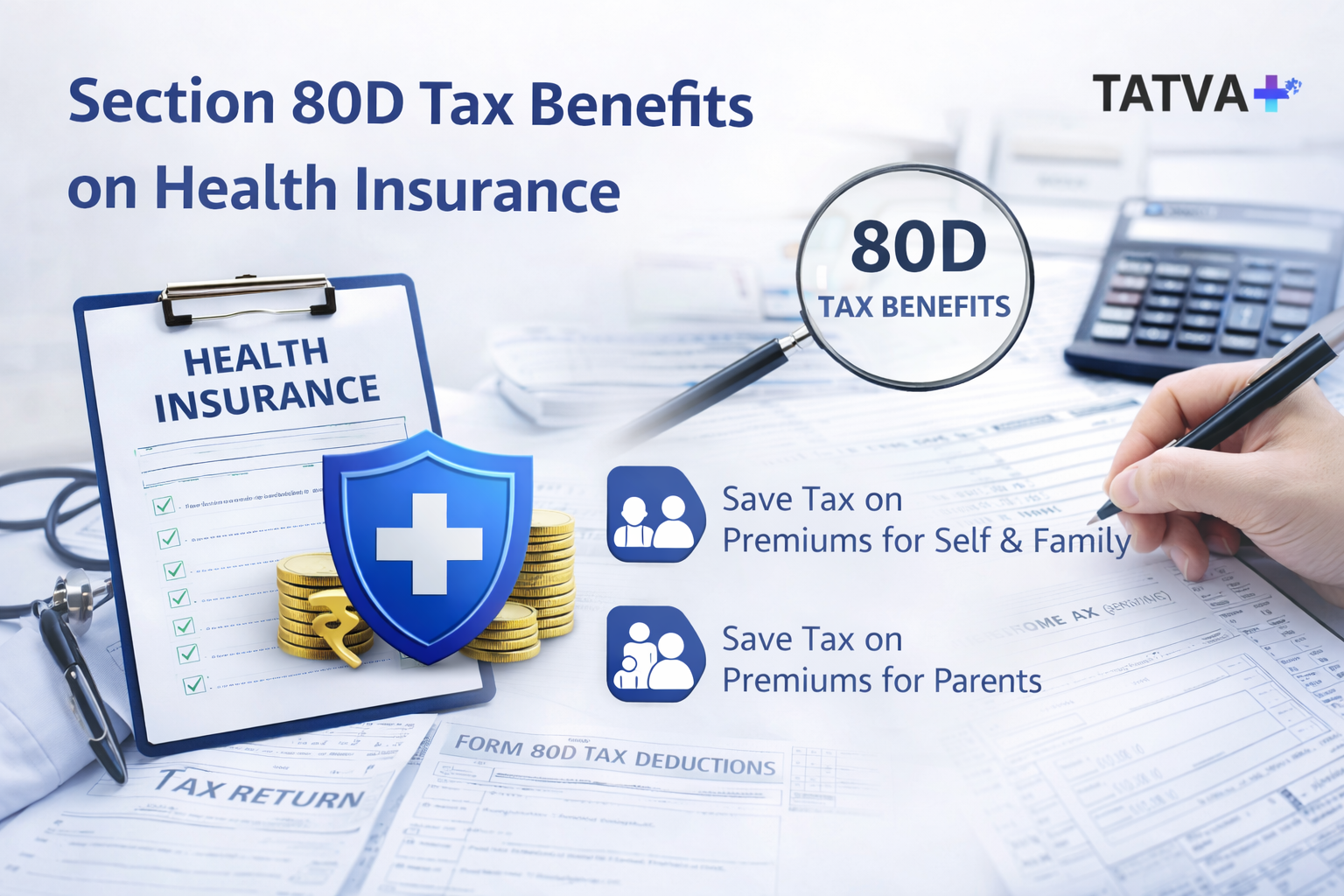
Section 80D is a provision under the Income Tax Act, 1961 that allows individual taxpayers and HUFs to claim a deduction on premiums paid for health insurance policies.
Key Difference from 80C: The Section 80C limit is Rs. 1.5 lakhs. Section 80D offers an additional deduction of up to Rs. 1 lakh — completely separate. Together, a taxpayer can claim deductions on Rs. 2.5 lakhs+ of combined investments and insurance premiums.
Section 80D Deduction Limits
| Who is Covered | Maximum Deduction | Note |
|---|
| Self, spouse, dependent children | Rs. 25,000/year | Premium for all covered members |
| Self + parents below 60 | Rs. 50,000 | Separate limit for parents' premium |
| Self + senior citizen parents (60+) | Rs. 75,000 | Higher limit for senior citizen parents |
| Self (senior citizen) + senior parents | Rs. 1,00,000 | Maximum possible deduction under 80D |
| Preventive health check-up | Up to Rs. 5,000 within overall limit | Included in the 80D limit, not additional |
Ready to Make a Smarter Health Decision?
Let a TatvaPlus expert help you find the right health insurance plan for your age, health profile, and budget — at absolutely no cost to you.
Practical Example: How Much Tax Can You Save?
Deepika, age 32, in the 30% tax slab:
- Health insurance for self and family: Premium Rs. 18,000/year
- Health insurance for parents (below 60): Premium Rs. 22,000/year
- Total premium paid: Rs. 40,000
- Total deduction claimed: Rs. 40,000 (within Rs. 50,000 limit)
- Tax saved at 30% slab: Rs. 12,000 per year
Over 20 years, that is Rs. 2.4 lakhs in tax savings — while remaining protected throughout.
What Qualifies for Section 80D?
Eligible Expenses
- Premium for health insurance for self, spouse, dependent children, and parents
- Premium for top-up and super top-up plans
- Contribution to Central Government Health Scheme (CGHS)
- Preventive health check-up (up to Rs. 5,000 within overall limit)
- Premium for standalone critical illness plans
Not Eligible
- Cash payments for insurance premiums (use non-cash modes only)
- OPD expenses paid out of pocket without a policy
- Group insurance premiums paid entirely by your employer
Old Tax Regime vs New Tax Regime
Important: Section 80D is only available under the Old Tax Regime. The New Tax Regime (default from FY 2023-24) does not offer 80D deductions. Calculate which regime is more beneficial before filing returns.
Ready to Make a Smarter Health Decision?
Let a TatvaPlus expert help you find the right health insurance plan for your age, health profile, and budget — at absolutely no cost to you.
Maximising Your 80D Benefits
- Buy separate policies for parents. Each policy generates separate deductions within different limits.
- Add top-up plans. Their premiums also qualify for 80D within the same limits.
- Use the Rs. 5,000 health check-up allowance. Annual screenings are both healthy and tax-efficient.
- Pay premiums by non-cash modes. Cheque, net banking, or UPI — cash payments for premiums are not eligible.
Frequently Asked Questions
Can I claim 80D for a policy bought for my spouse?
Yes. Premiums paid for self, spouse, and dependent children are all eligible under Section 80D, subject to the Rs. 25,000 overall limit.
Is the 80D deduction available for employer group insurance?
Only the portion of premium you pay yourself is eligible. If your employer pays the full premium, you cannot claim 80D.
Can I claim 80D if I paid the premium in cash?
Only preventive health check-up expenses (up to Rs. 5,000) can be paid in cash. Insurance premiums must be paid via non-cash modes to be eligible.
Does critical illness insurance premium qualify for 80D?
Yes. Premiums for standalone critical illness plans are eligible for Section 80D within the same overall limits as regular health insurance premiums.