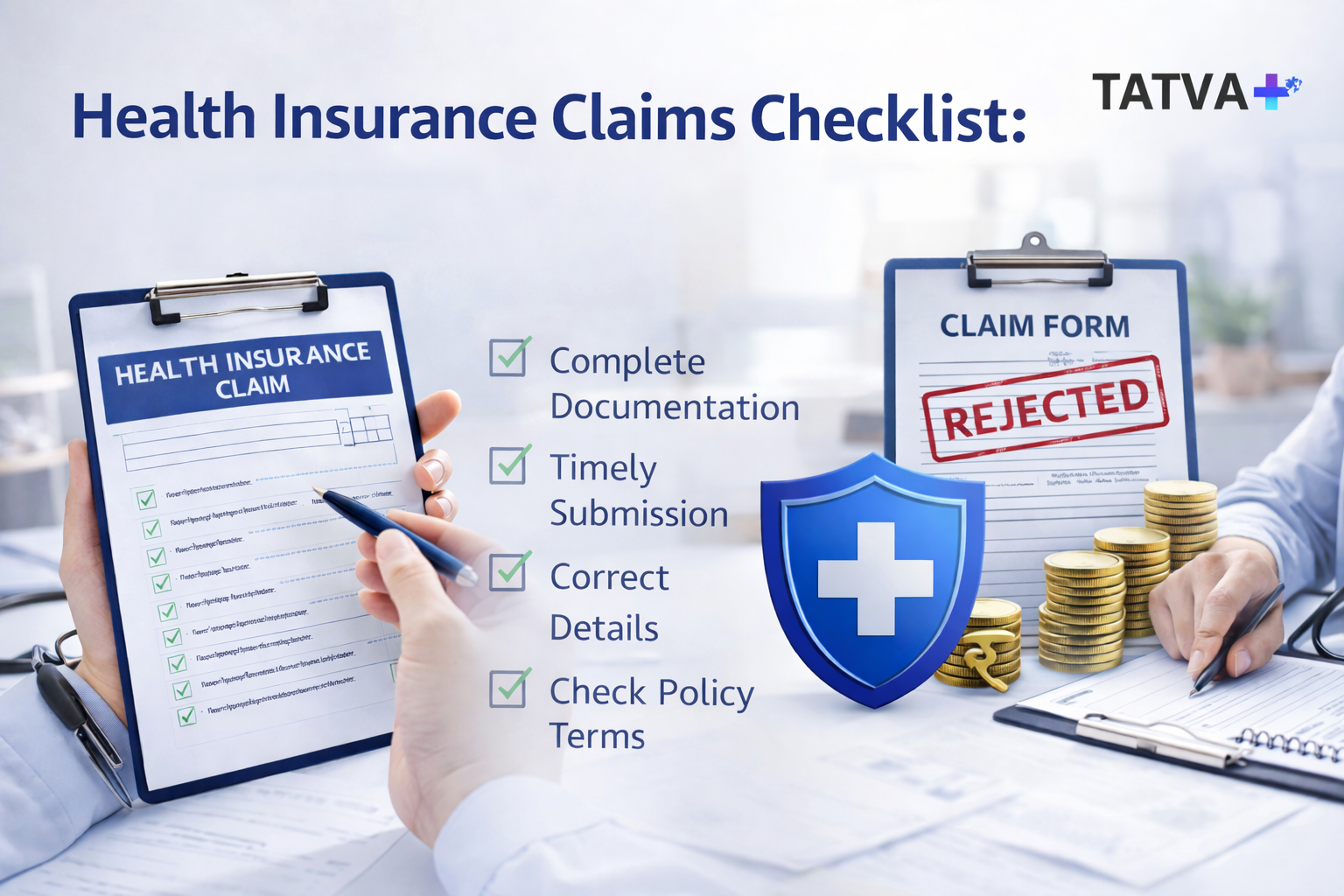
Part 1: Before Hospitalisation — Preparation Checklist
For Planned Hospitalisation
1
Check your network hospital list
Confirm your preferred hospital is in the insurer's network for cashless treatment.
2
Notify your insurer 48–72 hours in advance
Submit a pre-authorisation request with hospital details, diagnosis, and estimated cost.
3
Carry your insurance card or e-card
Keep the digital card accessible on your phone at all times.
4
Confirm coverage for your procedure
Call the insurer's helpline to confirm the specific treatment is covered.
5
Know your policy limits
Check remaining sum insured, applicable co-pay, and any sub-limits for the planned treatment.
For Emergency Hospitalisation
1
Go to the nearest hospital
Do not compromise care for network status in a true emergency.
2
Inform your insurer within 24 hours
Most insurers require notification within 24–48 hours of emergency admission.
3
Request the hospital insurance desk
Most hospitals with insurer tie-ups have a dedicated desk for cashless authorisation.
4
Start collecting documents from day one
Ask for all prescriptions, test reports, bills, and doctor's notes from admission onwards.
Part 2: Documents to Collect During Hospitalisation
Missing or incomplete documentation is where most claims go wrong. Collect all of the following before discharge:
- Filled and signed pre-authorisation / cashless request form
- Doctor's diagnosis letter or referral letter (if applicable)
- All indoor case papers and medical records
- All investigation and diagnostic test reports (blood, X-ray, MRI, CT scan)
- Discharge summary — signed by the treating doctor
- All original itemised hospital bills and receipts
- Pharmacy bills for medicines purchased during hospitalisation
- All prescription slips from attending doctors
- Pre-hospitalisation diagnostic reports (if relevant to the admission)
- NEFT bank details and cancelled cheque of the policyholder (for reimbursement)
- Photo ID and address proof of the patient
- Original health insurance policy copy (or policy number and company name)
- KYC documents: PAN card, Aadhaar
- FIR copy (for accidents) or MLC from police or hospital
Part 3: Cashless Claim Process
| Step | What to Do | Timing |
|---|
| 1. Choose network hospital | Confirm hospital is in insurer's network | Before / at admission |
| 2. Notify insurer | Submit pre-authorisation request | 48–72 hrs before (planned) / within 24 hrs (emergency) |
| 3. Insurance desk | Submit card, ID, and pre-auth form | At admission |
| 4. Insurer approves | Approval letter issued to hospital | Within a few hours to 24 hours |
| 5. Treatment proceeds | Insurer settles bill directly with hospital | During hospitalisation |
| 6. Discharge | Pay only non-covered portion (co-pay, exclusions) | At discharge |
| 7. Collect all documents | Discharge summary, bills, and all medical records | At discharge |
Part 4: Reimbursement Claim Process
- Pay the hospital bills. Collect all original bills, receipts, discharge summary, and records.
- Download and fill the claim form. Available on the insurer's website or app. Fill accurately — errors cause delays.
- Submit within the deadline. Most insurers require submission within 15–30 days of discharge.
- Submit all documents together. Incomplete submissions are the most common cause of delay.
- Track your claim. Use the insurer's app, website, or helpline to monitor status.
- Respond promptly to queries. If the insurer requests additional documents, respond within the specified timeframe.
Part 5: Common Reasons for Rejection — and How to Avoid Them
| Reason for Rejection | How to Avoid It |
|---|
| Non-disclosure of pre-existing conditions | Always disclose all health conditions honestly when buying |
| Treatment during waiting period | Know your policy waiting periods before hospitalisation |
| Excluded treatment or procedure | Check exclusion list; call insurer to confirm coverage |
| Policy lapsed at hospitalisation | Set up auto-renewal; renew at least 30 days before expiry |
| Missing or incomplete documents | Use the document checklist above |
| Delayed claim submission | Submit reimbursement claims within 15–30 days of discharge |
| Wrong or incomplete claim form | Fill carefully; match details with policy and hospital records |
| Treatment deemed not medically necessary | Confirm coverage before elective procedures |
Part 6: What to Do If Your Claim is Rejected
- Request a written rejection reason. The insurer must provide a written explanation citing the specific clause.
- Review against your policy. Check whether the rejection is valid under your exact policy terms.
- File a complaint with the insurer's grievance cell. All insurers must have a formal grievance mechanism.
- Approach the Insurance Ombudsman. If unresolved within 30 days, approach IRDAI's Bima Lok Sevak for free dispute resolution.
- Contact IRDAI directly. IRDAI's IGMS portal at igms.irda.gov.in accepts and reviews complaints.
Frequently Asked Questions
How long does a cashless claim take to get approved?
For planned procedures, approval typically comes within a few hours if pre-authorisation is submitted in advance. For emergencies, hospitals can usually get interim approval within 2–4 hours.
What if my hospital does not process cashless claims for my insurer?
Ask the hospital's insurance desk to verify — network agreements change. If confirmed non-network, pay the bills and file for reimbursement with all original documentation.
What is a TPA in health insurance?
A Third Party Administrator (TPA) is an IRDAI-licensed company that processes claims on behalf of insurers. Some insurers use TPAs; others settle claims in-house. Direct, TPA-free settlement is often faster.
What happens if my claim exceeds my sum insured?
Any amount above your sum insured is your responsibility. This is why adequate sum insured matters. Top-up or super top-up plans activate above the deductible and can cover the excess.